
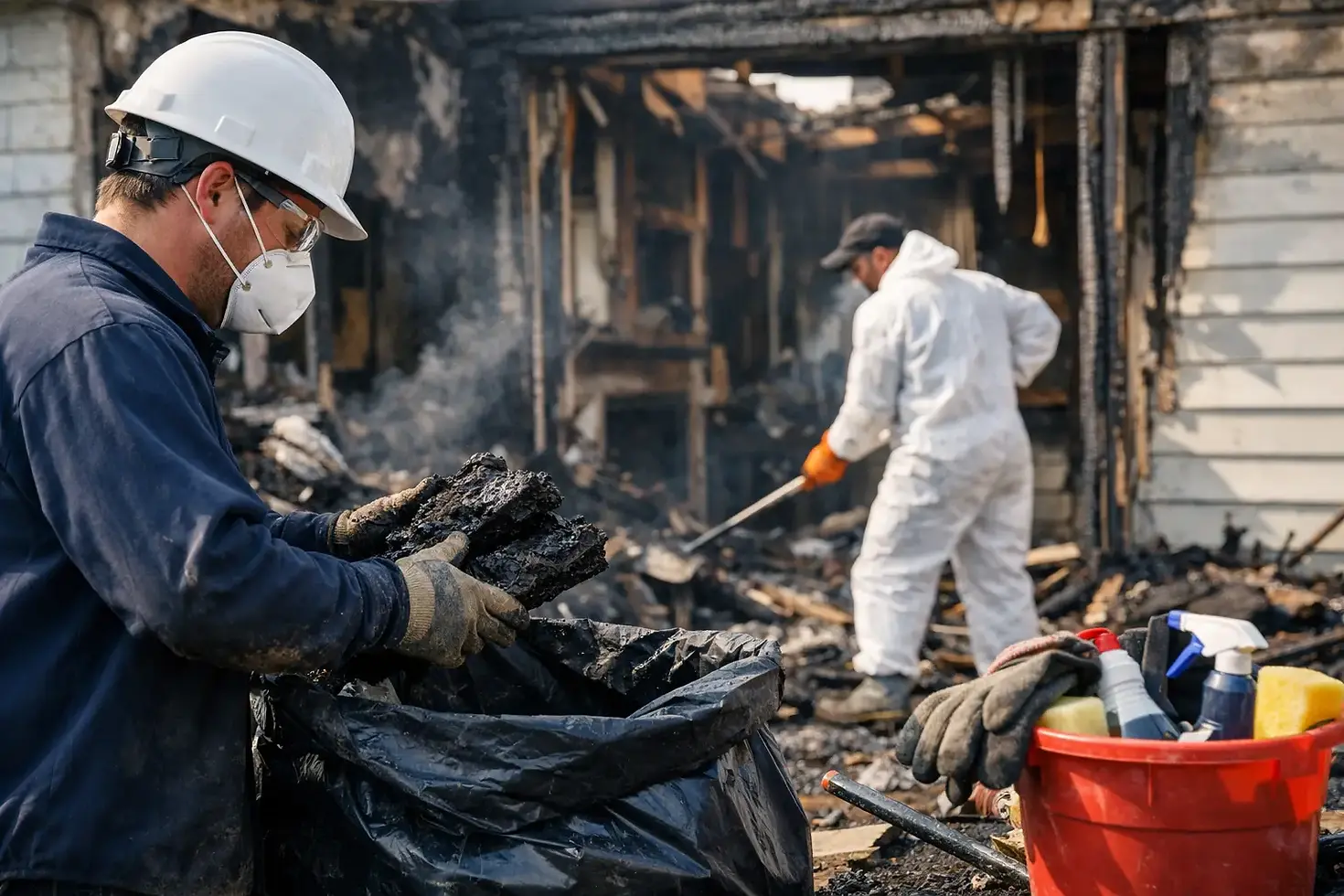
Fire Damage Cleanup After a House Fire
The fire trucks may be gone, but the property is not safe just because the flames are out. Fire damage cleanup starts in a building that has usually been exposed to smoke, soot, water, chemicals, and unstable materials all at once. What looks like a cleanup job on the surface is often a health and structural issue underneath.
For homeowners, landlords, and property managers, the first few hours matter. Soot can keep spreading through the air. Water used to put out the fire can begin soaking framing, flooring, and contents. Corrosive residue can start etching metal, glass, and finishes sooner than most people expect. The right response is not just about making the place look clean again. It is about making it safe, stable, and ready for the next step.
What fire damage cleanup really includes
A fire rarely damages only the room where it started. Smoke can travel through hallways, HVAC systems, attic spaces, wall cavities, and soft materials like carpet, drapes, and upholstery. Even a contained kitchen fire can leave residue far beyond the visible burn area.
That is why professional fire damage cleanup usually begins with a full assessment, not a quick wipe-down. The scope may include emergency board-up, debris removal, odor control, soot removal, content handling, air filtration, moisture drying from firefighting efforts, and selective demolition where materials cannot be safely restored. In many cases, reconstruction is also part of the path forward.
There is also a difference between damage that is visible and damage that affects habitability. Charred framing is obvious. Acidic soot on surfaces, airborne particulates, and contamination inside insulation or ductwork are easier to miss. If those issues are not addressed correctly, the property may continue to smell damaged, feel unhealthy, or show hidden deterioration later.
Why fire damage cleanup is also health restoration
After a fire, people often focus on what burned. Just as important is what was released. Modern homes contain plastics, adhesives, electronics, insulation, foams, finishes, and synthetic fabrics. When these materials burn, they can leave behind fine residues and persistent odors that are not appropriate for simple household cleaning.
This is one reason fire restoration should be approached as a health-first service, not just a cosmetic one. Soot particles can settle on horizontal surfaces, but they also lodge in porous materials and circulate through indoor air. Occupants with asthma, allergies, or respiratory sensitivity may be affected even when the property does not look severely damaged.
It also depends on the type of fire. A fast, hot fire can leave one pattern of residue. A slow, smoky fire can create heavier deposits and stronger odor penetration. Protein fires from cooking often leave less visible residue but a powerful odor that spreads widely. The cleanup method has to fit the source.
The first priorities after a fire
Once the fire department clears the scene, the property owner is usually dealing with a mix of urgency and uncertainty. The immediate goal is to prevent the damage from getting worse while protecting everyone involved.
A fire-damaged property may need to be secured right away. Broken windows, damaged doors, roof openings, or compromised exterior walls can expose the structure to weather, pests, and unauthorized entry. If water was used during suppression, drying should begin quickly to reduce secondary damage such as swelling materials, microbial growth, and odor.
The next priority is controlled access. People naturally want to go back inside and start sorting through belongings, but that can be risky. Ash, soot, unstable materials, and electrical hazards may still be present. In some cases, even handling damaged contents too soon can spread contamination to clean areas.
Documentation matters as well. Before major cleanup begins, the damage should be carefully recorded for insurance and project planning. That includes visible fire loss, smoke migration, water impact, and affected contents. A rushed cleanup without documentation can create problems later when trying to verify scope and cost.
Why DIY fire cleanup often makes things worse
Many property owners try to start with paper towels, shop vacuums, or household cleaners. The instinct is understandable. The problem is that soot is not ordinary dirt.
Dry wiping can smear residue deeper into surfaces. The wrong cleaning agent can set stains or create chemical reactions with soot deposits. Standard vacuums can blow fine particles back into the air if they are not equipped for this kind of contamination. Even something as simple as walking through the property without containment can track residue into unaffected rooms.
Odor is another common frustration. Air fresheners and surface sprays may cover the smell for a short time, but they do not remove what is causing it. If smoke residue remains inside porous materials, insulation, cabinetry, or HVAC components, the odor usually returns.
There is also the question of what should be cleaned versus removed. Some materials can be restored successfully. Others become a source of ongoing odor, staining, or health concern if they stay in place. That decision should be made with experience, not guesswork.
A practical look at the cleanup process
Every fire loss is different, but a disciplined process tends to produce better results. First comes inspection and hazard review. This helps determine whether the structure is stable, where contamination has spread, and which materials may need immediate removal.
Then the work shifts to mitigation. That may include board-up, roof tarping, water extraction, drying equipment, air scrubbers, and containment to keep affected areas from impacting the rest of the property. If contents can be saved, pack-out and item-by-item evaluation may be part of the plan.
Cleaning itself is usually layered. Loose debris is removed. Soot is addressed using methods matched to the surface and residue type. Non-salvageable materials are taken out in a controlled manner. Odor reduction may involve deep cleaning, source removal, filtration, and targeted treatments rather than one single step.
Only after the contamination and damage are properly addressed does rebuilding make sense. Painting over odor, replacing a few visible finishes, or reinstalling materials too early can trap problems inside the structure. The better approach is remediation first, then reconstruction on a clean and dry foundation.
Fire damage cleanup and insurance coordination
Insurance is often part of the process, but it does not make the situation simple. Property owners still need clear scope, documentation, photos, and communication about what is emergency mitigation versus what is full restoration.
This is where a full-service company can reduce stress. If the team handling the cleanup also understands drying, contents, demolition, and reconstruction, the project is less likely to stall between phases. There is usually less confusion about responsibility, timing, and what the property needs next.
That does not mean every fire loss follows the same path. Some claims move quickly. Others involve testing, questions about pre-existing conditions, or delays around approvals. A good restoration partner helps keep the work organized while protecting the property from further damage during the wait.
What local property owners should look for
In Ventura, Santa Barbara, and Santa Ynez Counties, speed matters, but so does judgment. A team that responds quickly but misses hidden contamination can leave you with a property that still smells damaged or is not ready for occupancy. A team that understands both remediation and rebuild can make better decisions from the start.
Look for professionals who approach fire damage as more than debris removal. The right crew should think about air quality, moisture, structural impact, salvageability, and occupant safety at the same time. They should also operate with discipline inside your home or property, because this work often happens when people are already under stress.
Triton Environmental and Restoration, Inc. is built around that kind of response - practical, health-focused, and ready to move from emergency service through restoration and reconstruction.
When the goal is to return safely, not just quickly
After a fire, everyone wants progress. That is understandable. But fast work only helps if it is the right work.
Fire damage cleanup should reduce risk, stop secondary damage, and create a clear path back to a safe living environment or market-ready property. Sometimes that means a limited cleanup in a contained area. Sometimes it means a much broader restoration effort because smoke, water, and residue traveled farther than expected.
The key is to treat the property based on actual conditions, not appearances. A room can look better and still not be truly clean. A structure can seem dry and still hold moisture in hidden spaces. And a property can smell almost normal while porous materials continue releasing smoke odor over time.
The best next step is usually the simplest one - get the damage assessed early, keep the property controlled, and make decisions based on health, safety, and long-term recovery rather than short-term appearance.


Comments