
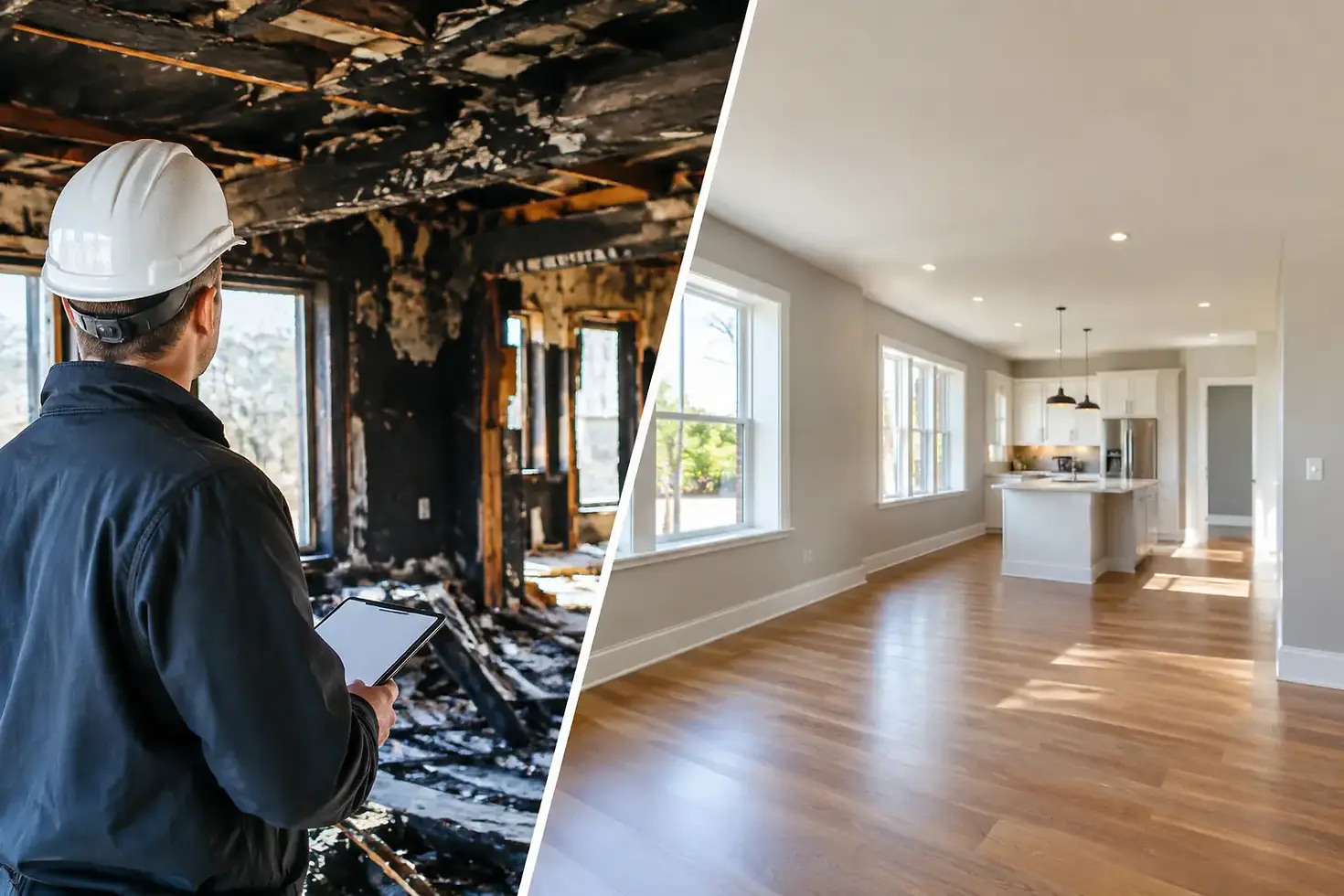
Fire Restoration Versus Reconstruction Explained
The smell of smoke may be gone, but that does not mean a fire-damaged property is ready for occupants, tenants, or a sale. Soot can remain inside wall cavities, smoke residue can corrode surfaces and equipment, and water used to extinguish the fire can create a separate moisture problem. Understanding fire restoration versus reconstruction helps property owners make sound decisions early, protect health, and avoid paying to rebuild over unresolved damage.
Fire restoration versus reconstruction: the key difference
Fire restoration addresses the damage left behind by the fire and the emergency response. Its purpose is to make the property clean, stable, dry, and safe for the next phase of recovery. This can include soot and smoke cleanup, odor reduction, water removal and drying, debris removal, contents handling, and cleaning or sealing affected structural materials.
Reconstruction is the work of rebuilding what cannot be safely or reasonably restored. That can mean replacing drywall, insulation, flooring, cabinetry, roofing, framing, electrical components, plumbing, windows, or other building materials damaged by flames, heat, smoke, or firefighting water.
The distinction matters because these services solve different problems. Restoration focuses on contamination, moisture, odors, and recoverable materials. Reconstruction focuses on returning the building to its functional condition after damaged materials have been removed. A property may need only restoration after a limited kitchen fire, while a larger loss may require extensive reconstruction. Many fire losses need both, performed in the right order.
What fire restoration includes
Fire damage is rarely limited to the room where flames were visible. Smoke travels through open doors, vents, attics, crawlspaces, and HVAC pathways. Fine soot particles can settle on furnishings and surfaces throughout the home. Depending on what burned, residues may include oils, proteins, plastics, or other materials that require different cleaning methods.
A professional restoration plan begins with an assessment of the affected areas and materials. The team identifies what can be cleaned, what should be removed, and what needs specialized handling. Immediate stabilization may include securing openings, protecting unaffected spaces, extracting firefighting water, and setting drying equipment when moisture is present.
Cleaning is not simply wiping black residue from walls. Improper cleaning can spread soot further, grind particles into surfaces, or leave behind odors that return when temperatures rise. Restoration work may involve detailed cleaning of ceilings, walls, fixtures, appliances, contents, and structural surfaces. In some cases, sealing is used after proper cleaning to control staining or persistent odor sources.
Odor reduction is also a health and comfort issue. A home can look clean while still carrying smoke odors in insulation, upholstery, unfinished wood, HVAC components, or hidden cavities. The right approach depends on the source. Surface treatments alone will not solve an odor problem if contaminated materials remain in place.
For homeowners and property managers, restoration also includes protecting what can be saved. Pack-out services can move and document affected belongings so cleaning, drying, and reconstruction can proceed without placing contents at additional risk. This is especially helpful when a property must be opened up for inspection or demolition.
When reconstruction is necessary
Reconstruction begins after the damaged environment has been properly addressed. It is necessary when fire, heat, smoke, or water has compromised materials beyond practical restoration. Charred framing, warped flooring, damaged electrical systems, smoke-saturated insulation, and weakened drywall are common examples.
The decision is not always obvious from a visual inspection. A cabinet may look intact but hold smoke contamination inside unfinished surfaces. Drywall may appear sound but have absorbed moisture from suppression efforts or conceal damaged insulation behind it. Electrical components exposed to significant heat, soot, or water require careful evaluation before they are returned to service.
Reconstruction may range from replacing a small section of drywall and repainting a room to rebuilding major portions of a residence. The scope depends on the fire's size, the materials involved, how long damage remained untreated, and whether water or smoke spread beyond the point of origin.
The goal is not to replace every item automatically. It is to make responsible decisions based on safety, building condition, cost, and the likelihood of a lasting result. Restoring a cleanable, structurally sound material can reduce disruption. Replacing a material that will continue to release odor, harbor contamination, or fail prematurely is often the better long-term choice.
Why the order of work matters
Starting reconstruction before remediation is complete can create expensive setbacks. New flooring, insulation, paint, or cabinetry should not be installed while hidden moisture, soot, or odor sources remain. Covering damage does not remove it, and it can make later inspections and repairs more disruptive.
A disciplined sequence usually starts with emergency stabilization and assessment. Next comes water removal and drying when needed, removal of unsalvageable materials, detailed cleaning, odor control, and confirmation that the affected area is ready for rebuilding. Reconstruction follows when the property is clean, dry, and properly prepared.
This process also protects indoor air quality. Fire residues and demolition debris can travel into unaffected rooms if containment and cleaning are not managed carefully. A health-focused approach considers the people who will live, work, or stay in the building after the repairs are complete, not only the appearance of the finished space.
How to make the right call for your property
After a fire, avoid relying on a quick visual judgment or a single estimate that combines every task without explaining the purpose of each one. Ask the restoration provider to identify the source of damage, the materials affected, the steps required before rebuilding, and what work is intended to restore versus replace.
It is also wise to document the property before major cleanup begins. Photos, videos, and a clear inventory of damaged rooms and contents can support insurance communication and help prevent confusion as the scope develops. Fire damage claims can change as concealed conditions are found, especially when walls, ceilings, flooring, or insulation must be opened.
For rental properties, communicate clearly with tenants about access, safety restrictions, and expected work phases. Property managers should also consider whether adjacent units, shared ventilation, attics, or common areas were affected by smoke or water. A fire in one unit can create conditions elsewhere that are not visible from the original loss area.
Real estate professionals should be especially cautious about properties that appear repaired but still have smoke odor, visible staining, or incomplete documentation. A properly managed restoration and reconstruction process supports transaction readiness because it addresses the underlying condition instead of hiding the evidence of damage.
One team from cleanup through rebuild
Working with separate vendors can be appropriate in some situations, but it can also create gaps between cleanup and rebuilding. A full-service team can coordinate remediation findings with the reconstruction scope, reducing the chance that new work must be removed later to address an overlooked issue.
For Ventura, Santa Barbara, and Santa Ynez County property owners, Triton Environmental and Restoration brings remediation and reconstruction together with a health-first focus. That means looking beyond cosmetic repair to address smoke residue, moisture, odors, and damaged materials before rebuilding begins.
After a fire, the most helpful next step is a careful assessment, not a rushed decision. Get the property stabilized, identify what is recoverable, remove what is not, and rebuild only after the space is ready to support a safe return.



Comments