
How to Dry Water Damaged Walls Safely and Fast
A wet wall can look like a minor stain at breakfast and become a mold problem behind the drywall by the weekend. The key to how to dry water damaged walls is acting quickly while recognizing when the water source, wall materials, or contamination level make professional remediation the safer choice.
Water does not stay where it first appears. It can travel behind baseboards, soak insulation, wick upward through drywall, and settle beneath flooring. Drying the visible surface alone may make a room look better, but it does not confirm that the wall cavity is dry or safe.
Start by Stopping the Water Source
Before bringing in fans or removing wet materials, stop the water at its source. Shut off the fixture supply if a pipe, appliance line, or toilet is leaking. If water is entering through a roof, window, or exterior wall during a storm, contain it as safely as possible and arrange for temporary protection.
Do not enter standing water near electrical outlets, wiring, appliances, or a damaged electrical panel. Turn off power to the affected area only if it can be done safely. If you are uncertain, wait for a qualified professional.
The type of water matters as much as the amount. Clean water from a broken supply line may be manageable when addressed immediately. Water from a washing machine discharge, dishwasher, overflowing toilet, sewer backup, floodwater, or a long-standing leak can contain contaminants. Those situations call for a more careful response than simply drying a wall with household fans.
Assess How Far the Water Reached
Look beyond the obvious water line. Signs that moisture may be inside the wall include bubbling paint, peeling wallpaper, swollen baseboards, soft drywall, staining, a musty odor, or flooring that is lifting along the wall. Drywall often absorbs water from the bottom up, so damage may extend farther than the visible stain suggests.
Press lightly on the lower portion of the wall. If it feels soft, crumbles, bows, or gives under pressure, it may need to be removed rather than dried in place. Wet insulation is another concern. Fiberglass, cellulose, and other insulation materials can hold moisture in a closed wall cavity, slowing drying and creating conditions for mold growth.
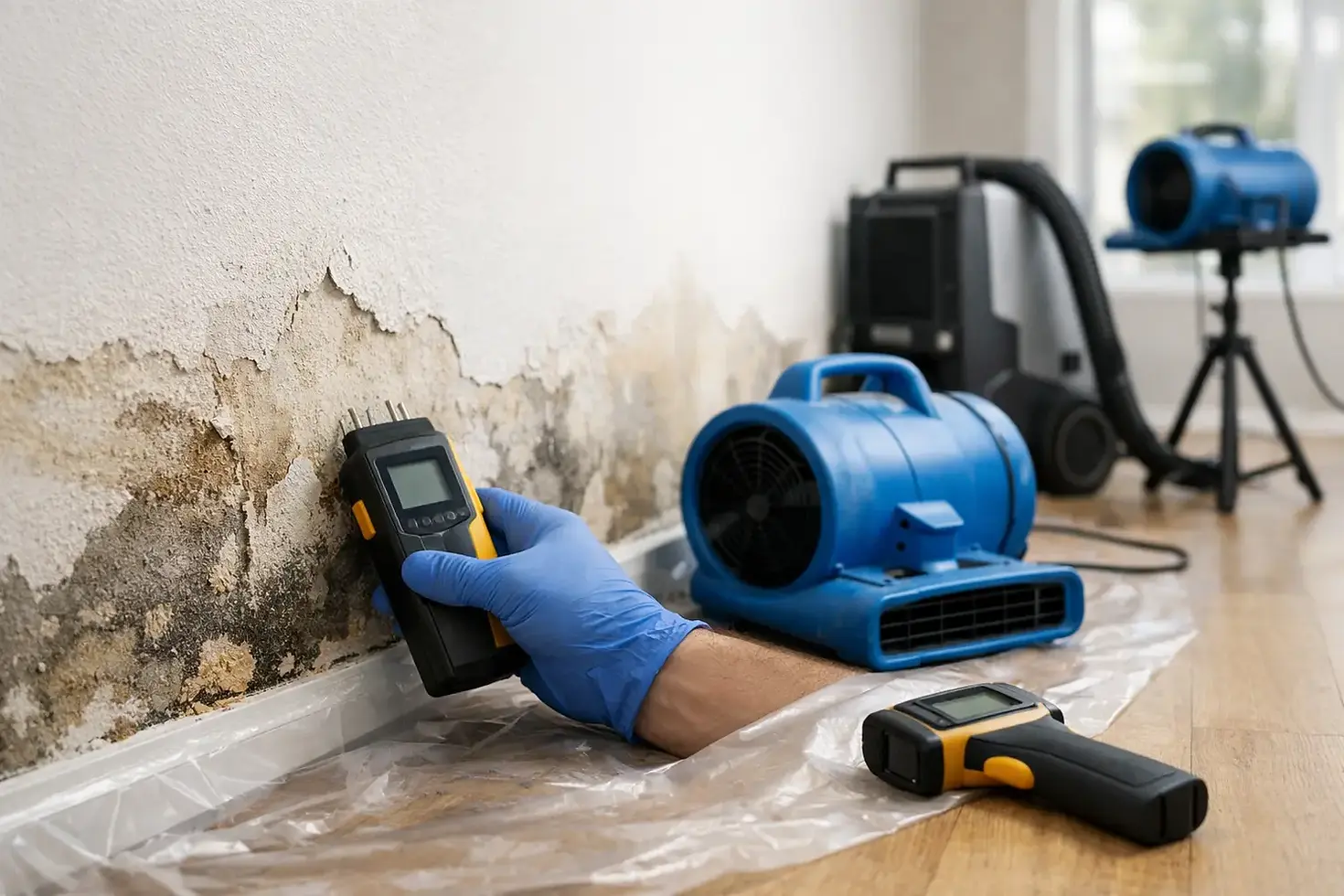
A moisture meter and thermal imaging equipment can help identify hidden moisture without opening every wall. These tools are especially useful in rental properties, multi-unit buildings, and homes being prepared for sale, where documentation and a clear scope of damage matter.
How to Dry Water Damaged Walls at Home
For a small area affected by clean water and caught quickly, controlled drying may be appropriate. First, remove furniture, rugs, boxes, and other belongings away from the wet wall. Take photos before removing materials if you may need to file an insurance claim.
Remove wet baseboards carefully if possible. Baseboards can trap water at the bottom of drywall and conceal moisture behind them. If the drywall remains firm and the water exposure was limited, opening the area behind the baseboard may improve airflow along the bottom of the wall.
Use fans to move air across the affected surface, not just toward it. Pair them with a dehumidifier sized for the room. In humid coastal conditions or after widespread water intrusion, a small consumer dehumidifier may not remove moisture fast enough. Keep doors and windows closed when outdoor air is humid, since outside air can make indoor drying less effective.
Warm, moving, dry air is the goal. Avoid using excessive heat, which can damage finishes or dry the face of the wall while moisture remains trapped deeper inside. Continue drying until measurements confirm the materials have returned to an acceptable moisture level compared with unaffected areas of the home.
When Drywall Should Be Removed
Drywall is porous. Once it has absorbed a significant amount of water, it can lose structural strength and become difficult to dry completely. In many cases, removing the wet portion of drywall is the faster and safer option.
Removal is generally warranted when drywall is soft or swollen, insulation is wet, water was contaminated, mold is visible, or the wall remained wet for more than 24 to 48 hours. A controlled opening can also allow drying equipment to reach framing and the interior wall cavity.
Do not cut into a wall until you consider possible electrical wiring, plumbing, gas lines, and asbestos-containing materials in older properties. If you suspect contamination or mold, uncontrolled demolition can spread particles into other rooms. Containment, protective equipment, and appropriate cleaning practices matter.
Do Not Ignore Mold Warning Signs
Mold does not require a dramatic flood. A slow leak behind a vanity, refrigerator line, shower wall, or exterior window can wet building materials long enough for mold growth to begin. A musty odor, recurring discoloration, persistent humidity, or staining that returns after painting all deserve attention.
Bleach is not a complete answer for mold on porous materials like drywall. It may lighten surface staining without resolving moisture inside the wall or contamination within the material. Painting over water damage is not a repair either. If the underlying moisture remains, the problem can return and affect indoor air quality.
For occupants with asthma, allergies, respiratory sensitivities, or compromised immune systems, it is wise to be more cautious. Health-focused restoration means addressing both the damaged material and the conditions that allowed it to stay wet.
Protect Your Property During the Drying Process
Document the source of water, affected rooms, visible damage, and any actions taken. Keep receipts for emergency repairs, equipment rentals, and temporary accommodations if applicable. Property managers and landlords should also record communication with tenants and the timeline of the event.
Do not assume a wall is dry because it feels dry to the touch. The paper face of drywall can dry before the gypsum core, framing, insulation, or backside of the wall. Professional drying uses moisture readings, humidity monitoring, and equipment placement based on the materials and the extent of the loss.
This approach can help avoid a common and expensive cycle: dry the surface, repaint the wall, smell mildew weeks later, then remove more materials than would have been necessary with prompt, proper drying.
When to Call a Water Damage Professional
Call for professional help when the affected area is large, the water source is contaminated, water has reached multiple rooms, walls feel soft, insulation is wet, or the leak may have been present for more than a day. Immediate help is also appropriate after a slab leak, roof leak, burst pipe, appliance failure, toilet overflow, or storm-related intrusion.
A qualified restoration team can locate moisture, establish containment when needed, remove unsalvageable materials, dry structural components, document the process, and coordinate repairs after remediation. That full path matters because a home is not truly restored when the stain is gone. It is restored when the moisture issue, contamination risk, and damaged materials have been properly addressed.
For homeowners and property professionals in Ventura, Santa Barbara, and Santa Ynez Counties, Triton Environmental and Restoration provides 24-hour emergency water damage service with a health-first focus. Fast action protects more than walls - it protects the people who live and work around them.
If you are unsure whether a wall can be dried in place, treat uncertainty as a reason to inspect further. A timely moisture assessment can be the difference between a manageable repair and a much larger restoration project.


Comments