

Basement Flooding Guide for Fast, Safe Recovery
A wet basement can change from a cleanup problem to a health and property problem in a matter of hours. Water can move beneath flooring, wick into drywall, damage stored belongings, and create conditions where mold may begin to grow. This basement flooding guide gives homeowners and property managers a clear path forward when water enters the lowest level of a property.
Basement Flooding Guide: Protect People First
Do not enter a flooded basement if electrical power is on and the water level is near outlets, appliances, a breaker panel, or extension cords. Water and electricity are a dangerous combination. If it is safe to do so from a dry location, turn off power to the affected area. If you cannot do that safely, stay out and contact a qualified electrician or restoration professional.
Floodwater also requires caution. Water from a burst clean-water supply line is very different from water that has backed up from a drain, overflowed from a toilet, entered from outdoors, or sat for an extended period. Sewage, stormwater, and water of an unknown source can carry bacteria and other contaminants. Keep children, pets, and occupants away from the area until the source and condition of the water are understood.
Leave the basement immediately if you see cracked walls, bowed framing, a sagging ceiling, or signs that the building structure has been affected. A flooded area is not the place to investigate a structural concern alone.
Stop the Water Source if You Can
The next priority is preventing additional water from entering. For a plumbing leak, shut off the local fixture valve or the home’s main water supply if the source is not immediately clear. A failed washing machine hose, water heater, refrigerator line, or supply pipe can release a surprising amount of water quickly.
If the water is coming from rain, first look for the obvious entry point only if conditions are safe. Water may be entering through a window well, foundation crack, exterior door, overflowing gutter, or an overwhelmed drain. Do not attempt to work on electrical equipment, pumps, or drains while standing in water.
In some situations, pumping out water too quickly can create problems. When groundwater outside the foundation is very high, rapid pumping may place added pressure on basement walls or floors. The right approach depends on the source, water depth, soil conditions, and the condition of the structure. When in doubt, bring in a qualified restoration team to assess the situation before making it worse.
Document Damage Before Cleanup Begins
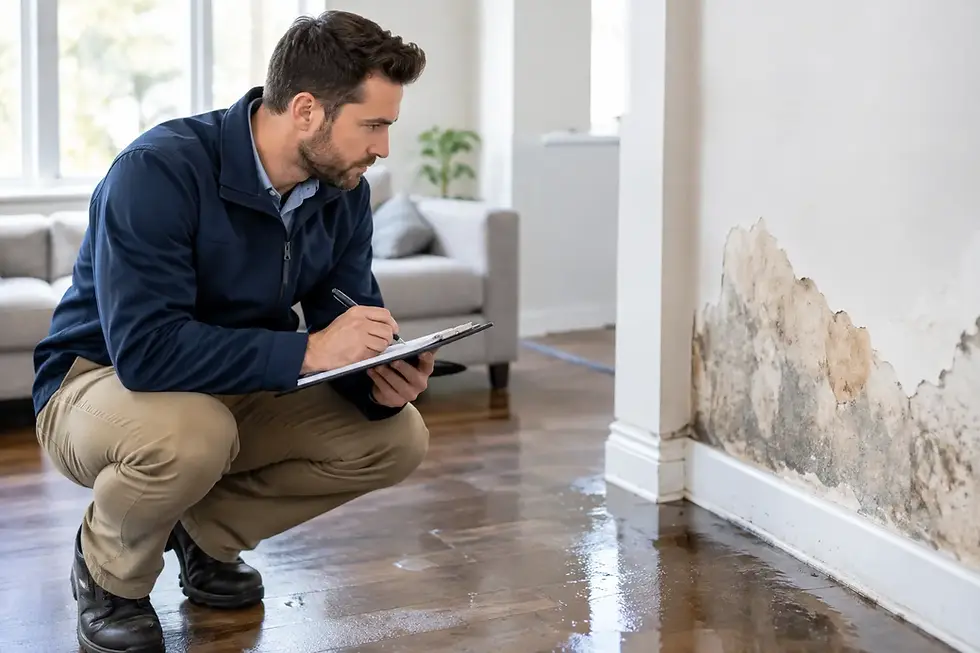
Once people are safe and the water source is controlled, document the affected space. Take wide photos of each room, then closer photos of walls, flooring, appliances, furniture, and damaged personal items. Capture the apparent source of the water when possible.
This record can help with insurance conversations, property management reporting, and future repair decisions. Save receipts for emergency expenses, including temporary accommodations, plumbing work, extraction, and protective materials. Avoid discarding damaged belongings before they have been documented, unless they present an immediate health hazard.
For landlords and property managers, written notes matter as much as photos. Record when the problem was discovered, which units or rooms were affected, where the water traveled, what immediate actions were taken, and whether tenants were exposed to contaminated water. Clear documentation supports a more organized recovery process.
Remove Water and Start Drying Quickly
Standing water should be extracted as soon as it is safe to do so. The longer materials remain wet, the more likely it is that moisture will spread behind walls, under flooring, and into framing. A basement can look dry on the surface while insulation, subflooring, carpet pad, and wall cavities remain wet.
For a small, clean-water incident on a hard, nonporous floor, a wet vacuum and fans may help with the first stage of cleanup. However, household fans alone do not confirm that a structure is dry. Proper drying requires controlling humidity, moving air in the right places, and measuring moisture in affected materials.
Professional water damage remediation typically includes extraction, targeted drying equipment, moisture readings, and monitoring. Depending on the loss, the work may also involve removing wet baseboards, drywall, insulation, carpet, or padding so concealed materials can dry or be safely replaced. The goal is not simply to make the room look normal. It is to return the area to a dry, safe condition before reconstruction begins.
Time matters. Mold can begin developing when damp materials are left untreated, especially in enclosed basement spaces with limited airflow. If water has been present for more than a day, has affected drywall or carpeting, or has reached multiple rooms, professional evaluation is a sensible next step.
Know What Can Be Cleaned and What May Need Removal
The source of the water and the material involved will guide this decision. Nonporous items such as metal shelving, plastic storage bins, and some sealed surfaces may be cleaned and disinfected when exposure is limited and the water was clean. Porous materials are more difficult. Carpet padding, unfinished wood items, insulation, cardboard boxes, upholstered furniture, and drywall can hold moisture and contamination long after the visible water is gone.
Materials exposed to sewage, stormwater, or unknown water often require more conservative handling. Trying to save every item can prolong the drying process and may leave behind odor, microbial growth, or contamination. Sentimental or high-value contents may need specialized evaluation rather than a quick disposal decision.
Avoid covering up the issue with paint, new flooring, or fragrance products. Those measures do not remove trapped moisture or contamination. A dry, clean substrate should come before cosmetic repairs.
When to Call a Basement Flooding Professional
A professional response is strongly recommended when water is contaminated, the source is unknown, the basement has standing water, or the damage reaches walls, flooring, insulation, or stored contents. You should also call for help when the affected area has a musty odor, visible mold, a sewage backup, or water that has traveled from one room to another.
For properties in Ventura, Santa Barbara, and Santa Ynez Counties, Triton Environmental and Restoration can respond to water damage emergencies, address health-related remediation concerns, and coordinate the path from cleanup through reconstruction. A full-service response helps reduce the handoffs that can delay a property’s return to safe use.
A qualified team should be able to explain the scope of damage, identify which materials need drying or removal, document moisture conditions, and communicate clearly about the next steps. For homeowners and real estate professionals, that transparency is especially valuable when occupancy, sale timelines, or insurance coordination are involved.
Reduce the Chance of Another Basement Flood
After the basement is dry, take time to identify why the water entered. The answer may be as simple as a failed hose or as complex as exterior drainage and foundation conditions. A lasting repair should address the cause, not only the visible damage.
Check that gutters are clear and downspouts direct water away from the foundation. Inspect window wells, exterior grading, basement doors, and drainage paths before the rainy season. Test a sump pump if the property has one, and consider a battery backup where power outages are common during storms. Water alarms near water heaters, laundry appliances, and sump systems can provide an early warning before a small leak becomes a major loss.
Inside the basement, store valuables in sealed plastic bins and keep them off the floor. Review appliance hoses, plumbing connections, and aging water heaters regularly. Property managers should also ensure tenants know who to contact after hours and where the main water shutoff is located.
A dry-looking basement is not always a fully recovered basement. Acting quickly, treating unknown water carefully, and confirming that hidden materials are dry can protect the health of occupants as well as the value of the property.


Comments