
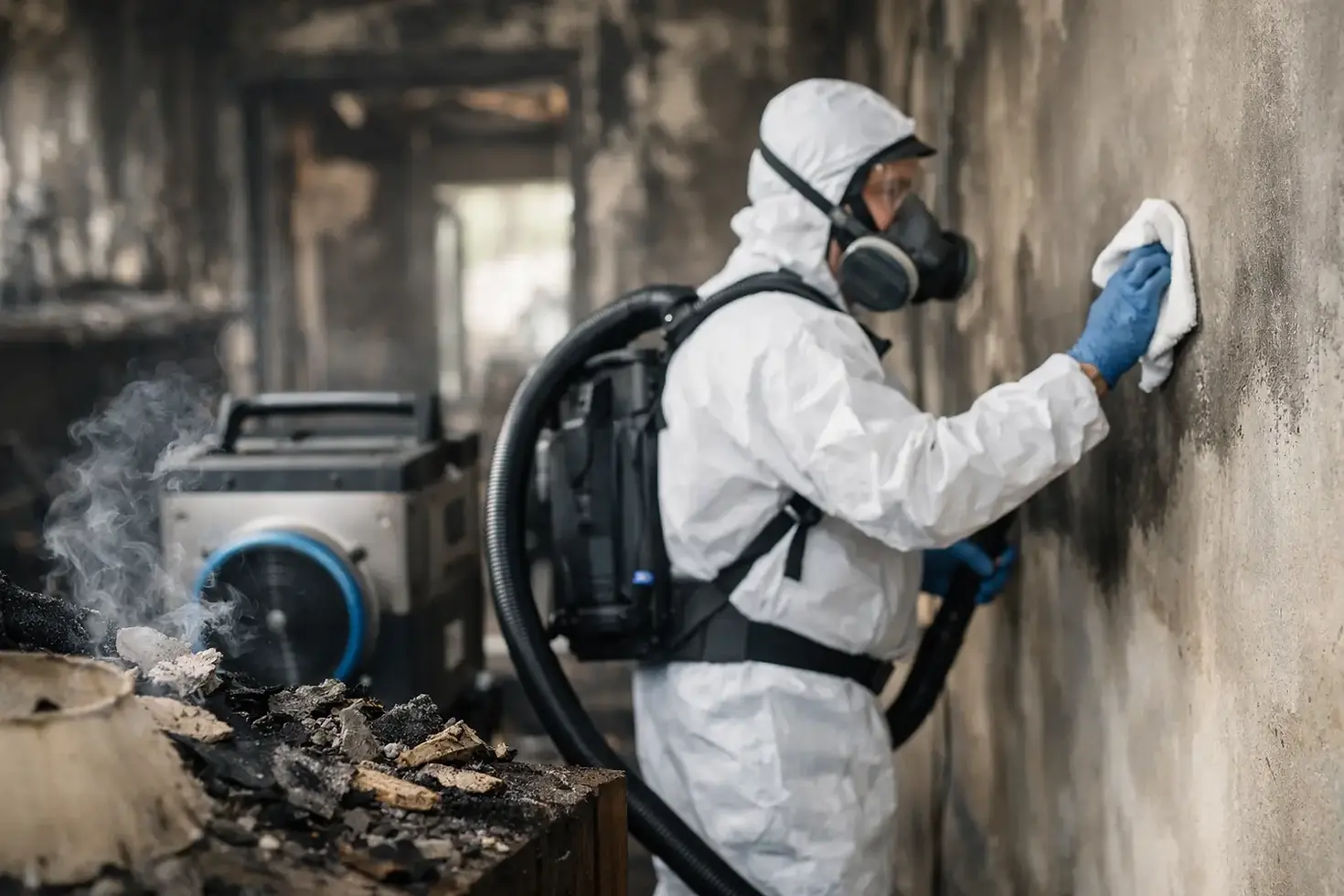
Smoke Odor Removal Services After a Fire
A fire can be small enough to leave limited visible damage and still leave a property smelling like smoke for months. Smoke odor removal services address what ordinary cleaning cannot: odor particles that have settled into drywall, insulation, carpeting, upholstery, HVAC systems, and other porous materials throughout the home.
For homeowners, landlords, and property managers, that lingering smell is more than an inconvenience. It can make a home feel unsafe, complicate insurance claims, delay a sale or rental turnover, and create concern for occupants with respiratory sensitivities. The right response is not to cover the odor with fragrance. It is to identify where smoke traveled, remove affected materials when necessary, and treat the remaining surfaces correctly.
Why Smoke Odor Stays After the Fire Is Out
Smoke is made up of tiny particles, soot, gases, and oily residues. As warm smoke moves through a building, it follows airflow into closets, attic spaces, wall cavities, ductwork, and rooms far from the original fire. When it cools, those particles settle onto surfaces and embed in absorbent materials.
That is why a home may smell stronger on a warm day, after the furnace turns on, or when humidity rises. Heat and moisture can reactivate odor-causing residues. A room that seems acceptable after a quick wipe-down may become unpleasant again once the property is occupied.
The type of material burned also matters. Wood, fabric, plastics, food, and synthetic finishes each produce different residues. Some leave dry soot that can be removed with specialized methods. Others create sticky or oily films that require careful cleaning before odor treatment can work. Applying deodorizing products over uncleaned soot often produces temporary results at best.
When Professional Smoke Odor Removal Services Are Needed
A candle mishap or a brief kitchen incident may be manageable with ventilation and targeted cleaning. But professional smoke odor removal services are usually the safer choice after any fire that affected more than one room, involved synthetic materials, or left visible soot on walls, ceilings, vents, or contents.
Professional help is especially valuable when the odor persists after cleaning, occupants report irritation, the HVAC system circulated smoke, or the property is being prepared for a tenant, buyer, or insurance inspection. In these situations, the source may be hidden behind finishes or inside materials that cannot be effectively cleaned in place.
For property professionals, timing matters. A smoke odor discovered during a listing walkthrough or final inspection can affect buyer confidence quickly. Addressing it early helps avoid rushed cosmetic work that fails to solve the underlying issue.
What a Proper Odor Removal Process Looks Like
Effective fire restoration begins with assessment, not a deodorizing machine. A trained restoration team evaluates the fire source, the path smoke traveled, the materials affected, and the condition of the home’s ventilation system. The scope may include visible rooms, but it should also consider attics, crawlspaces, cabinets, contents, and adjacent areas.
Source Removal Comes First
The most reliable way to remove smoke odor is to remove or clean the source materials. Fire debris, charred materials, heavily contaminated insulation, and unsalvageable porous contents may need to be removed. This can feel difficult when belongings have sentimental value, but keeping severely affected materials can allow odors to return after the rest of the home has been treated.
Surfaces that can be restored are cleaned using methods appropriate for the residue and material. This may include detailed cleaning of walls, ceilings, framing, hard surfaces, and contents. Drywall, wood, and painted surfaces require different approaches. Using the wrong cleaner or excessive moisture can cause additional damage or drive residues further into the material.
HVAC and Hidden Areas Need Attention
If the heating and cooling system operated during or shortly after the fire, smoke can be distributed through the ductwork. Replacing filters alone may not be enough. Vents, returns, equipment, and ducts should be evaluated as part of the restoration plan.
Hidden spaces also deserve careful attention. Smoke commonly enters attic insulation, wall cavities, and crawlspaces through gaps around wiring, plumbing, vents, and framing. If odor remains after visible areas have been cleaned, these less obvious locations are often the reason.
Deodorization Is a Final Treatment, Not a Shortcut
Once the source has been removed or cleaned, professional deodorization can neutralize remaining odor molecules. Depending on the scope of damage, restoration teams may use specialized equipment, thermal fogging, hydroxyl treatment, or other methods selected for the materials and occupancy conditions.
The best method depends on the property. For example, a furnished home with delicate contents may require a different approach than an empty rental unit undergoing reconstruction. Ozone treatment is sometimes discussed in fire restoration, but it is not appropriate for every situation and requires strict safety controls. No one should occupy the area during a treatment that is not designed for occupied spaces.
Why Covering the Smell Usually Fails
Air fresheners, scented candles, and consumer odor sprays can make a room seem better for a few hours. They do not remove soot residue or contamination in porous materials. In some cases, strong fragrances make it harder to recognize whether the fire-related odor has actually been resolved.
Painting over smoke-stained walls without cleaning and sealing them properly is another common misstep. Odor can migrate through paint, especially when humidity changes. If reconstruction is needed, odor control should be built into the restoration plan before new finishes, flooring, or insulation are installed.
This is where a full-service remediation and reconstruction provider can make a meaningful difference. The same team can coordinate cleanup, removal, odor treatment, and the repairs needed to return the property to a clean, livable condition. That reduces gaps between trades and helps protect the work already completed.
Health, Safety, and Property Value
A smoke odor is a signal that residues may still be present. While every fire and exposure is different, soot and smoke particles can be irritating, particularly for people with asthma, allergies, or other respiratory concerns. Children, older adults, and pets may also be more sensitive to indoor air conditions after a fire.
A health-focused restoration plan does not promise that every odor concern has the same cause or solution. It does ensure that the work goes beyond surface appearance. The goal is to return the property to a condition where occupants can live, work, or move forward with confidence.
For landlords and managers, documented remediation can also support a more orderly turnover process. For homeowners planning to sell, it helps prevent a persistent smell from becoming a last-minute negotiation issue. For insurance-related repairs, a clear scope of work can help everyone understand what was cleaned, removed, treated, and rebuilt.
Choosing a Local Restoration Team After Smoke Damage
After a fire, speed matters, but so does discipline. Look for a restoration company that can assess the full extent of smoke impact, explain what needs to be done and why, and communicate clearly with property owners, managers, and insurance representatives.
Ask whether the team handles both remediation and reconstruction, how they protect unaffected areas during work, and whether employees entering the property are screened and trained. You should also ask how the company determines that odor treatment is complete. A credible provider will not rely on a single machine or a blanket promise. They will explain the sequence: source removal, cleaning, targeted treatment, and verification.
Triton Environmental and Restoration, Inc. serves Ventura, Santa Barbara, and Santa Ynez Counties with health-focused fire cleanup, odor reduction, and reconstruction support. For a property affected by smoke, the priority is not simply making it smell better. It is restoring a space that feels safe, clean, and ready for the people who depend on it.
If smoke odor remains after a fire, do not wait for it to become part of the building. A timely assessment can identify the source, protect the property from unnecessary rework, and give occupants a clearer path back to normal.


Comments