
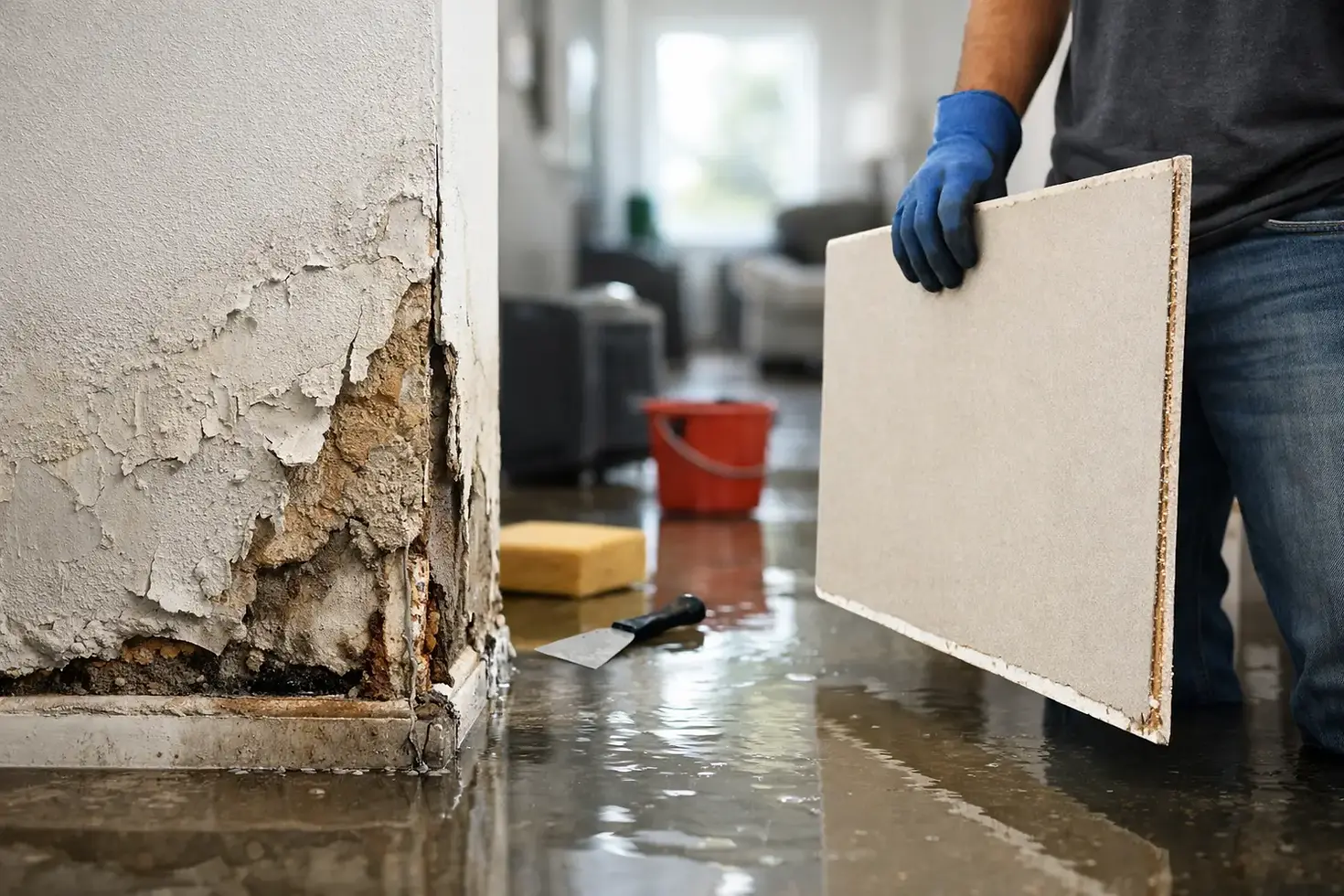
Wet Drywall Salvage: Save It or Replace It?
A small leak behind a refrigerator line can leave a wall looking almost normal while moisture spreads through the drywall, insulation, baseboards, and framing. That is why wet drywall salvage is not a decision based on appearance alone. The right question is whether the material can be dried completely and safely before contamination, deterioration, or mold becomes a larger health and reconstruction problem.
For homeowners, landlords, and property managers, speed matters. But fast action should not mean guessing. A qualified assessment can identify where water traveled, what type of water caused the damage, and whether targeted drying can preserve the wall or whether removal is the safer, more cost-effective choice.
When Wet Drywall Salvage Can Work
Drywall is made primarily of gypsum pressed between paper layers. The gypsum itself does not feed mold, but the paper facing does. Once that facing stays damp, mold can grow and the board can lose its strength. The goal of professional drying is to remove moisture before those conditions take hold.
Salvage may be possible when the water came from a clean source, such as a recently discovered supply-line leak or an overflow from a clean fixture. The affected area must be addressed quickly, usually within the first day or two, and the drywall must still be firm, flat, and structurally intact. Limited wetting near the bottom of a wall is often more manageable than water that has soaked an entire room.
Successful drying also depends on what is behind the wall. If insulation is wet, it can hold moisture against drywall and wood framing long after the wall surface feels dry. Insulation may need to be removed through controlled access openings so air can reach the wall cavity. This is not unnecessary demolition. It is a way to verify that moisture is not being sealed inside the structure.
A moisture meter and other professional monitoring tools help establish whether materials are returning to an appropriate dry standard. Fans alone do not prove a wall is dry. They can make a room feel less humid while moisture remains in the lower wall, sill plate, or insulation.
When Wet Drywall Should Be Removed
There are situations where drying drywall is not the responsible option. Water quality is the first concern. Any drywall affected by sewage, toilet backups involving waste, rising groundwater, or other contaminated water should generally be removed. The paper facing and porous core can absorb contaminants that cannot be reliably cleaned out through surface treatment.
Removal is also usually warranted when drywall is swollen, soft, crumbling, bowed, delaminating, or visibly moldy. A wall that feels firm at eye level may still be compromised near the floor, where water naturally collects. Baseboards can hide staining, swelling, and microbial growth behind them.
Drywall that has remained wet for several days presents a different level of risk, even if the original water source was clean. The longer materials stay wet, the more likely mold growth and odor issues become. In coastal and inland areas of Ventura, Santa Barbara, and Santa Ynez Counties, changing temperatures and naturally humid conditions can make passive drying especially unreliable.
A controlled drywall cut is often the cleanest solution. Removing the damaged section provides access to wet insulation, framing, and hidden surfaces. Once those materials are dried and cleaned as needed, reconstruction can restore the wall properly rather than covering an unresolved moisture problem.
The Water Source Changes the Decision
Not all water damage carries the same risk. Understanding the source helps determine the appropriate response.
Clean water typically comes from a broken supply line, rainwater that entered a property, or an appliance leak before the water has contacted contaminants. It may allow for wet drywall salvage if discovered early and dried thoroughly.
Gray water can come from washing machines, dishwashers, showers, or sinks. It may contain chemicals, food particles, or other contaminants. Drywall affected by gray water requires a more cautious assessment, particularly if the water sat for an extended period.
Black water includes sewage and other highly contaminated sources. Porous materials exposed to black water should be removed and disposed of under appropriate containment and cleaning procedures. Trying to save a few sheets of drywall is not worth creating an indoor health hazard for occupants, maintenance staff, or future buyers.
What to Do Before Help Arrives
If water is actively entering the property, stop the source if it is safe to do so. Shut off the water supply for a plumbing leak, move belongings away from the area, and protect nearby furniture or flooring. If water is near electrical outlets, fixtures, or appliances, avoid contact and turn off power to the affected area only if it can be done safely.
Do not puncture a sagging ceiling without understanding what is above it. A water-filled ceiling can collapse, and there may be wiring, insulation, or a larger leak overhead. Keep people and pets away from the area and arrange for a professional inspection.
You can take clear photos of the visible damage, the source of the leak, and affected belongings for insurance documentation. Then focus on limiting additional damage. Household fans and a dehumidifier may help in a very small, clean-water event, but they are not a substitute for verifying moisture levels inside walls and beneath finishes.
Avoid painting over stains, reinstalling wet baseboards, or closing access openings too soon. Those steps can trap moisture and make a simple repair become a mold remediation project weeks later.
How Professionals Evaluate a Wet Wall
A proper assessment begins with the source and timing of the loss. Was the leak stopped immediately, or did water run overnight? Was the water clean, gray, or contaminated? Did it affect one wall, or did it move under flooring and into adjacent rooms?
The affected area is then mapped using moisture detection tools and visual inspection. Technicians may check drywall at different heights, behind baseboards, around door casings, inside cabinets, and on the opposite side of shared walls. This helps define the true drying area instead of treating only the obvious stain.
If drying is appropriate, the process may include removing baseboards, creating carefully placed access points, extracting water, installing air movement and dehumidification equipment, and monitoring progress. If removal is necessary, containment and controlled demolition help prevent dust and potential contaminants from spreading to unaffected areas.
The final step is not simply turning off equipment. Materials should be documented as dry before reconstruction begins. This is particularly valuable for rental properties, real estate transactions, and insurance claims, where clear records can support a confident repair decision.
The Cost Trade-Off: Dry Now or Repair More Later
Homeowners understandably want to avoid demolition. When drywall can be saved, targeted drying may reduce reconstruction costs and disruption. It can preserve paint finishes, minimize patching, and get a room back in service sooner.
But salvage is not always the less expensive choice. Extended drying of materials that are already contaminated or structurally damaged can add time without producing a safe result. It may also delay the work needed to reach wet insulation or framing. In those cases, selective removal can be faster, cleaner, and more predictable.
The best decision balances the condition of the materials with the health of the building. A dry-looking wall is not the same as a dry wall. Likewise, a small removal area is not a failure of restoration. It can be the practical step that protects the rest of the property.
Choose a Health-First Restoration Response
Water damage decisions affect more than drywall. They can influence indoor air quality, occupant comfort, property value, and the scope of any future repair. A response that addresses moisture, contamination, and reconstruction as connected issues gives owners a clearer path forward.
Triton Environmental and Restoration approaches water losses with that health-first perspective, from emergency drying and remediation through the reconstruction work needed to make the property whole again. If a wall has been wet, the most helpful next step is a prompt, informed evaluation before hidden moisture has time to become a bigger problem.


Comments